



PolyJet—short for Polymer Jetting—is an inkjet-based additive manufacturing process originally developed by Objet Geometries around 1998. In 2011, Objet merged with Stratasys, and the technology continued to evolve into one of the most precise additive manufacturing processes available.
The PolyJet 3D printing process produces smooth, highly accurate parts by depositing extremely small layers of photopolymer material. Because of the fine layer resolution, PolyJet 3D printing is well-suited for parts that require tight tolerances, smooth surfaces, and intricate features.
PolyJet also offers one of the widest material ranges in additive manufacturing, from rigid plastics to flexible elastomers. Some materials are even designed for rapid tooling and 3D printed molds, typically capable of producing 10–100 molded parts depending on geometry, size, and molding material.
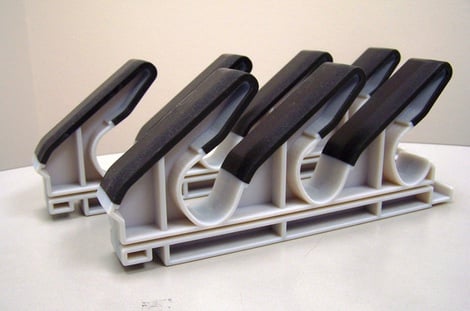
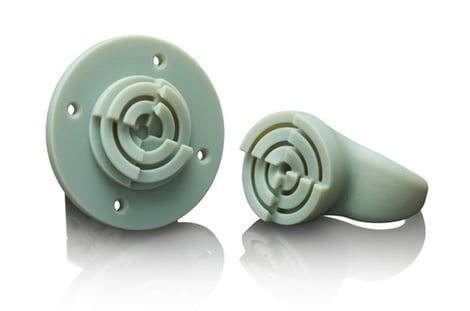
PolyJet 3D printing works by jetting microscopic droplets of photopolymer material onto a build platform. These droplets are immediately cured using UV light to solidify each layer.
From design to prototype and production, our engineering team is ready to help bring your idea to life using advanced PolyJet 3D printing services.

PolyJet 3D printing materials provide one of the widest material ranges available in additive manufacturing. Material durometers can range from 20A flexible elastomers to 90D rigid plastics, with options for transparent parts, high-temperature materials, and full-color printing.
Some of the most commonly used materials include:
See the full list of available PolyJet materials for additional options. If you do not see the material you need, visit our materials page for additional additive manufacturing materials across other technologies.
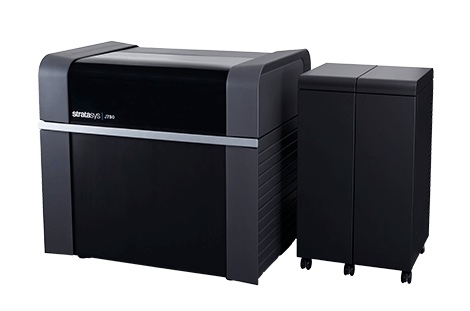
PolyJet 3D printing technology has been used in additive manufacturing for more than 20 years and continues to evolve with larger build platforms and improved resolution.
Modern PolyJet systems can build parts with platforms up to 20” × 15” × 8” (500 × 380 × 200 mm) while producing extremely fine layers as small as 0.00055 inches.
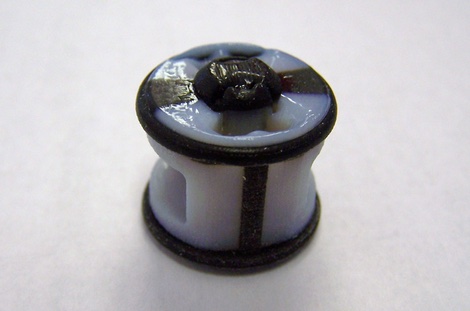
Some systems can jet up to six different materials simultaneously, allowing engineers to create prototypes with multiple colors, varying textures, transparent sections, and different durometers in a single print.
Our experts have a proven history of providing innovative solutions at every stage of product development—from product design through production.




.png)